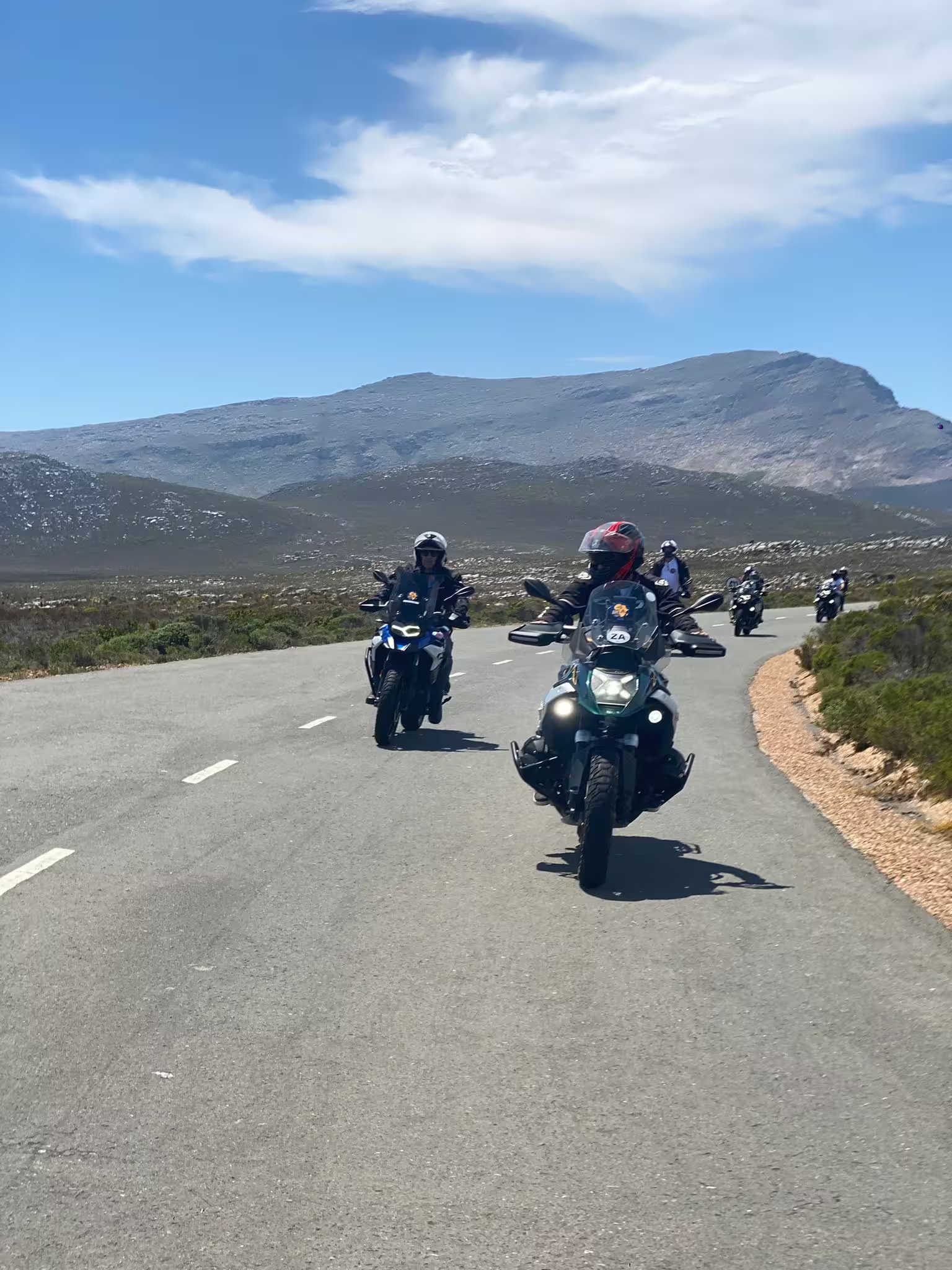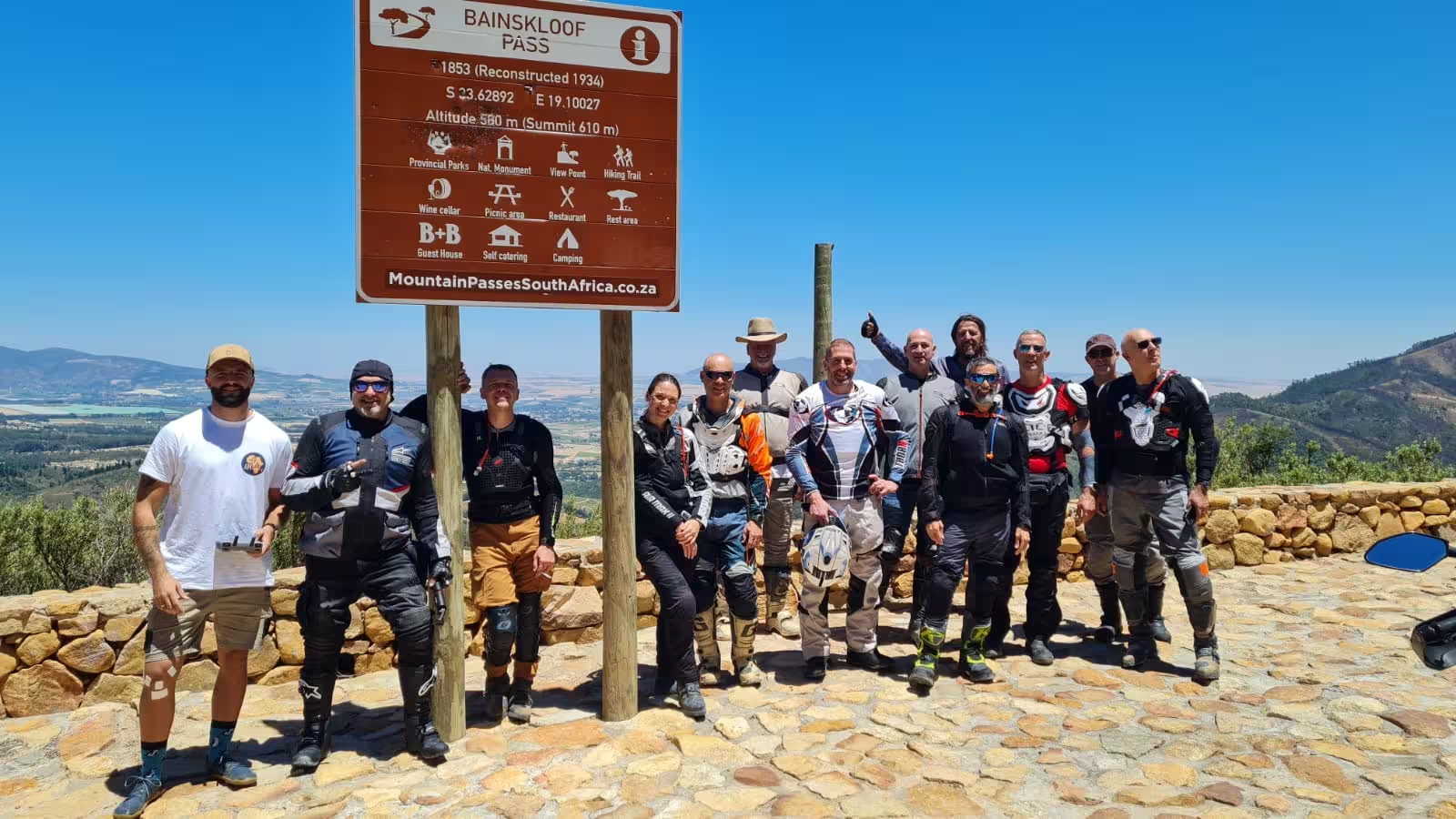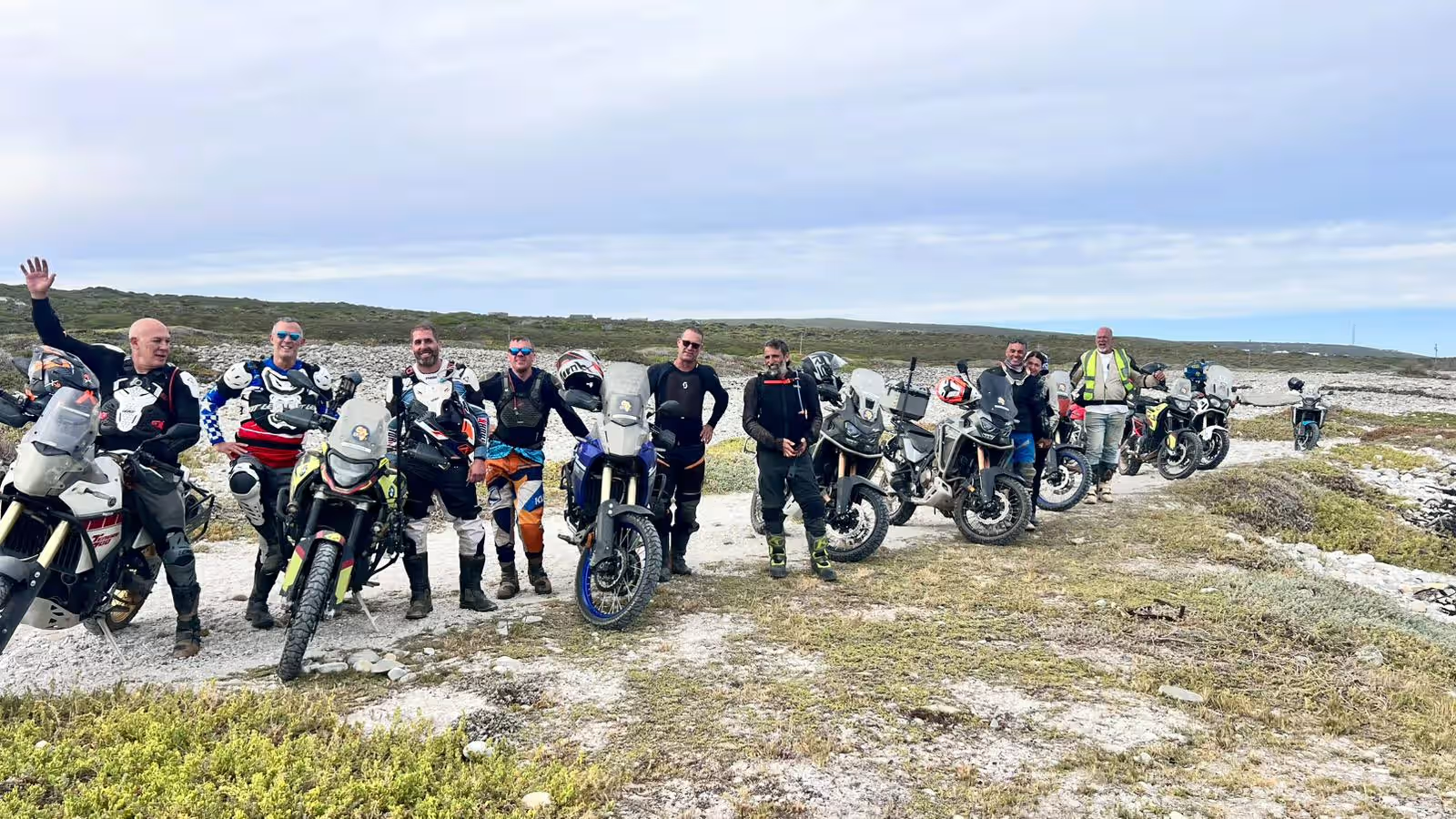
Knowing what to pack for a motorcycle tour in Africa saves you from two classic mistakes: arriving without the right protection, or dragging a suitcase of things you never touch. After guiding riders from around the world, I've seen both many times.
The principle is simple: pack for protection on the bike, layers for the weather, and very little else. On a supported tour, the vehicle carries your bag, so you don't need to fit your life into panniers. You also don't need much.
Riding gear: what you must bring
These are required on every AMT tour. We don't ride without them.
| Item | Requirement |
|---|---|
| Helmet | Full-face or modular, ECE or DOT approved. On Mufasa, full-face only |
| Jacket and trousers | Riding gear with armour at the elbows, shoulders and back, ideally ventilated. On Mufasa, chest armour too |
| Gloves | Proper motorcycle gloves |
| Boots | Sturdy motorcycle boots that rise above the ankle |
| Knee guards | Full protective knee guards, required on Mufasa |
| Rain suit | Packed away, for coastal mist and passing showers |
Worth adding:
- Knee protection on Simba too, if your trousers' armour is light.
- A second pair of gloves: summer-weight for the Karoo heat, and a warmer or waterproof pair for cool mornings.
- A clear and a tinted visor, or a photochromic one.
- Earplugs. Long days of wind noise are tiring.
- A hydration pack or water bottle you can reach at stops.
If you're flying in, wear your boots and jacket on the plane, or pack them in your checked bag, and bring your helmet as hand luggage.
Layers for African weather
In the Cape riding season, expect around 18°C to 30°C, but a single day can cover all of it: a cool, misty morning on the coast, then a hot afternoon in the Karoo. Our best time to ride guide explains the weather month by month.
- Base layer: moisture-wicking shirts, not cotton.
- Mid layer: a thin fleece or thermal liner for early starts and mountain passes.
- Ventilated or mesh-panel gear for the inland heat, with the liner zipped in or out as needed.
- Neck tube or buff: sun and dust protection, and warmth in the morning.
- Sunscreen and lip balm with SPF. The African sun burns fast, even through a visor gap.
Off the bike: lodges, safari and evenings
The dress code is casual on the bike and smart casual at dinner. You need less than you think, because most lodges offer laundry.
- 3–4 casual shirts and one smarter shirt for dinners
- 2 pairs of trousers or shorts, one smart enough for a good restaurant
- Light shoes or sandals for the evenings, so your feet escape the boots
- A warm jacket or fleece for the evenings, which get cool in the Karoo and on the coast
- Swimwear: many lodges have pools, and Knysna and Hermanus are on the sea
- For the safari drive: neutral colours, a hat and sunglasses. Binoculars are a bonus.
Documents and money
- Passport valid for at least six months beyond your stay, with two blank pages.
- Driving licence with a motorcycle endorsement. If it isn't in English, bring an International Driving Permit too.
- Medical insurance covering motorcycle riding and medical evacuation. It's mandatory on our tours. Our travel insurance guide explains what it must cover.
- South African traveller declaration, required for everyone entering or leaving the country. Complete it on the SARS website.
- A credit card in your own name for the motorcycle security deposit.
- Copies of everything: photos on your phone and a paper copy in your bag.
- Some cash in rand for tips and small stops. Cards work almost everywhere else. Tipping 10–15% at restaurants is standard.
Electronics, health and small things
- Plug adaptor. South Africa uses its own three-pin plug (Type M), and many lodges also have Type C sockets. Bring a universal adaptor.
- Phone mount and charging cable, if your bike or gear supports it. Check with us before you bring a mount.
- Action camera and spare batteries. You'll want to film the passes.
- Power bank for long days.
- Personal medication in its original packaging, plus a small kit: painkillers, plasters, antihistamine and rehydration salts.
- Insect repellent for evenings outdoors.
- A small daypack for the safari drive and walks.
What to leave at home
- A hard suitcase. Bring a soft duffel bag, which travels better in the support vehicle.
- Your own bike tools and spares. The support vehicle carries tools and a spare motorcycle.
- Expensive jewellery and valuables you can't replace. Our South Africa safety guide explains why.
- Anything "just in case." South Africa has excellent shops if you forget something.
On our tours your bag travels in the support vehicle and is waiting at the lodge every night. On the bike you only carry what you need for the day: water, sunscreen, a layer and your phone.
Ready to pack? Choose your road: Simba, 100% tar, or Mufasa, about 75% gravel. Or browse all our guided motorcycle tours.
Printable packing checklist
Riding gear
- Helmet, ECE or DOT approved (full-face on Mufasa)
- Armoured jacket and trousers (chest armour on Mufasa)
- Knee guards (required on Mufasa)
- Gloves (summer and cool-weather pairs)
- Boots above the ankle
- Rain suit
- Thermal liner or fleece
- Base layers
- Neck tube
- Earplugs
Documents and money
- Passport (6+ months valid, 2 blank pages)
- Licence with motorcycle endorsement (+ IDP if not in English)
- Medical insurance covering motorcycling and evacuation
- South African traveller declaration
- Credit card in your name
- Copies of documents
- Some cash in rand
Off the bike
- Casual clothes and one smart outfit
- Evening shoes or sandals
- Warm evening layer
- Swimwear
- Hat and sunglasses
Small things
- Plug adaptor
- Chargers and power bank
- Camera and batteries
- Medication and small first-aid kit
- Sunscreen and lip balm
- Insect repellent
- Small daypack
- Soft duffel bag
Frequently asked questions
Can I rent riding gear in South Africa?
Some rental companies offer gear, but fit and quality vary. We strongly recommend bringing your own helmet and boots at least.
Do I need waterproof gear?
Bring a packable rain suit. Rain is uncommon in the November to April season, but the Garden Route can surprise you.
How cold does it get?
Mornings in the mountains and on the coast can be cool, especially early and late in the season. A thermal liner covers it.
Do I need vaccinations for South Africa?
None are mandatory for South Africa. Talk to your doctor about routine boosters.
Is the tap water safe?
At the hotels and lodges on our South Africa routes, yes.
How much luggage can I bring?
Your bag travels in the support vehicle, and a soft bag travels best. Ask us for the current size guidance before you pack.
About the author
Kerren Wolfin is the founder and lead guide of Africa Moto Tours. He personally leads every South Africa departure and has packed for, and seen riders pack for, every kind of African ride. He built AMT to give riders the African adventure he wanted to find as a new guide, and to create a home for guides who meet the same standard.